
Understanding the 2025 Telemedicine E&M Codes

Understanding the 2025 Telemedicine E&M Codes

The American Medical Association (AMA) introduced 17 new telemedicine evaluation and management (E&M) codes this year. Here’s the breakdown of these new codes: CPT® code range 98000-98007 are reported for synchronous audio-video encounters, and CPT code range 98008-98015 are reported for synchronous audio-only encounters.

There is a final code in this section, 98016, which is reported for a brief synchronous virtual check-in for established patients. The term “synchronous” means that these encounters are occurring in real time, and these services are in lieu of an in-person visit for medically appropriate care, when the patient agrees to this format for the visit.

The audio-video and audio-only sets of codes are divided into new and established patient encounters. These codes are determined based on the level of medical decision-making (MDM) or time. When using MDM, just like some of the  other E&M services, there is a requirement of a medically appropriate history and/or examination, and the MDM levels are straightforward, low, moderate, and high.

The level of MDM for these codes is determined using the established E&M guidelines within the CPT book. For audio-only encounters specifically, the service must include more than 10 minutes of medical discussion, whether the level is based on MDM or time.

When time is being used to determine the level of service, there are a few guidelines to follow to help with code selection. First, it’s important to note that a telemedicine encounter of less than five minutes is not reported. The CPT code, 98016, is actually based solely on time, specifically 5-10 minutes of medical discussion with established patients only.

The audio-video and audio-only encounters are reported for encounters lasting 15 minutes or more for a new patient, and 10 minutes or more for an established patient. Each level of service has a total number of minutes that need to be met or exceeded in order to report the applicable code based on time.

The time spent establishing connection and arranging the appointment, and any time spent on online digital communication, like emails or text messaging, is not counted in the total time.

In the instance that during an audio-video encounter, the video connections are lost and the only available option is to continue the visit with audio only, report the service for which the majority of the interaction time was spent. If the majority of the time was spent on audio-only, remember that the 10 minutes of medical discussion requirement must be met.

If the total time with a new patient is 75 minutes or longer, or 55 minutes or longer with an established patient, there is a prolonged services add-on code, 99417. This code is reported in addition to the telemedicine E&M code for each additional 15-minute increment of total time.

When an audio-video or audio-only telemedicine service has been provided on the same day as an in-person E&M service, the in-person E&M code should be reported. The MDM elements or the time spent on the telemedicine visit can be counted towards determining the level of the in-person E&M service. The key to this rule is to ensure that any overlapping time and elements are not counted twice.

The area of coding and billing for telemedicine services will continue to evolve and change, and having these new telemedicine codes is a great step toward accurately reporting these types of encounters. For further information, and to get the latest updates regarding telehealth polices and billing information, visit Telehealth policy updates | Telehealth.HHS.gov.

Facebook
Twitter
LinkedIn

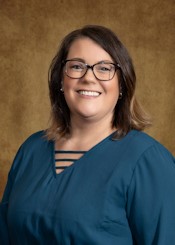
Jodi Worthington, CCS-P, CEMC

Jodi joined First Class Solutions in November 2021 with 22 years of coding and coding auditing experience. Ms. Worthington has extensive experience in all areas of outpatient coding including interventional radiology, ER, surgery, observation, diagnostic radiology, vascular surgery, wound care, clinic, ancillary and recurring encounters. Additionally, as a CCS-P and CEMC, she has expertise in E&M assignment and auditing. She is also experienced in edits and denials management. Jodi is currently serving one of our prestigious Federal government entities. She is a graduate of the University of Cincinnati.

Related Stories

Leave a Reply

Please log in to your account to comment on this article.

Featured Webcasts

AI, Audits, and the Future of the Revenue Cycle

Artificial intelligence is rapidly transforming healthcare revenue cycle operations, from coding and auditing to compliance and denials. Join industry leaders Pam Warren (MaineHealth) and Raemarie Jimenez (AAPC) for a live fireside chat exploring how AI is changing workflows, workforce roles, payer-provider dynamics, and compliance risk—and what organizations should be doing now to prepare.

June 17, 2026

Trending News

Featured Webcasts

Ask Dr. Hirsch: Clarifying Medicare’s Most Misunderstood Rules – Part 2

Medicare regulations are complex and even seasoned professionals struggle to apply them consistently. Due to overwhelming demand, Dr. Hirsch returns for Part 2 of Ask Dr. Hirsch: Clarifying Medicare’s Most Misunderstood Rules to answer even more of Medicare’s most misunderstood questions, covering inpatient status, observation, SNF access, Medicare Advantage denials, and more. Join Dr. Hirsch as he provides clear, referenced answers to real-world questions submitted by your peers, helping you navigate Medicare compliance with confidence and clarity.

June 18, 2026

Reengineering Utilization Management: Building an Adaptive Model for the New Payer Era

Traditional utilization management models can no longer keep pace with regulatory shifts, payer scrutiny, and operational pressures. In this webcast, Tiffany Ferguson, LMSW, CMAC, ACM, ACPA-C, introduces an Adaptive Model strategy that modernizes UM through role specialization, technology-driven workflows, and proactive, team-based processes. Attendees will learn how to restructure programs to improve efficiency, strengthen clinical collaboration, and enhance financial performance in a rapidly changing healthcare environment.

May 20, 2026

Compliance for the Inpatient Psychiatric Facility (IPF-PPS): Minimizing Federal Audit Findings by Strengthening Best Practices

Federal auditors are intensifying their focus on inpatient psychiatric facilities, using advanced data analytics to spotlight outliers and pursue high‑dollar repayments. In this high‑impact webcast, Michael Calahan, PA, MBA, Compliance Officer and V.P., Hospital & Physician Compliance, breaks down what regulators are really targeting in IPF-PPS admissions, documentation, treatment and discharge planning. Attendees will learn practical steps to tighten processes, avoid common audit triggers and protect reimbursement and reduce the risk of multimillion-dollar repayment demands.

April 9, 2026

Mastering MDM for Accurate Professional Fee Coding

In this timely session, Stacey Shillito, CDIP, CPMA, CCS, CCS-P, CPEDC, COPC, breaks down the complexities of Medical Decision Making (MDM) documentation so providers can confidently capture the true complexity of their care. Attendees will learn practical, efficient strategies to ensure documentation aligns with current E/M guidelines, supports accurate coding, and reduces audit risk, all without adding to charting time.

March 31, 2026

Trending News

Prepare for the 2025 CMS IPPS Final Rule with ICD10monitor’s IPPSPalooza! Click HERE to learn more

Get 15% OFF on all educational webcasts at ICD10monitor with code JULYFOURTH24 until July 4, 2024—start learning today!

This Memorial Day, we honor those who gave all for our freedom. Take 20% off sitewide through May 29 with code MEMORIAL26 at checkout

CYBER WEEK IS HERE! Don’t miss your chance to get 20% off now until Dec. 1 with code CYBER25

CYBER WEEK IS HERE! Don’t miss your chance to get 20% off now until Dec. 2 with code CYBER24