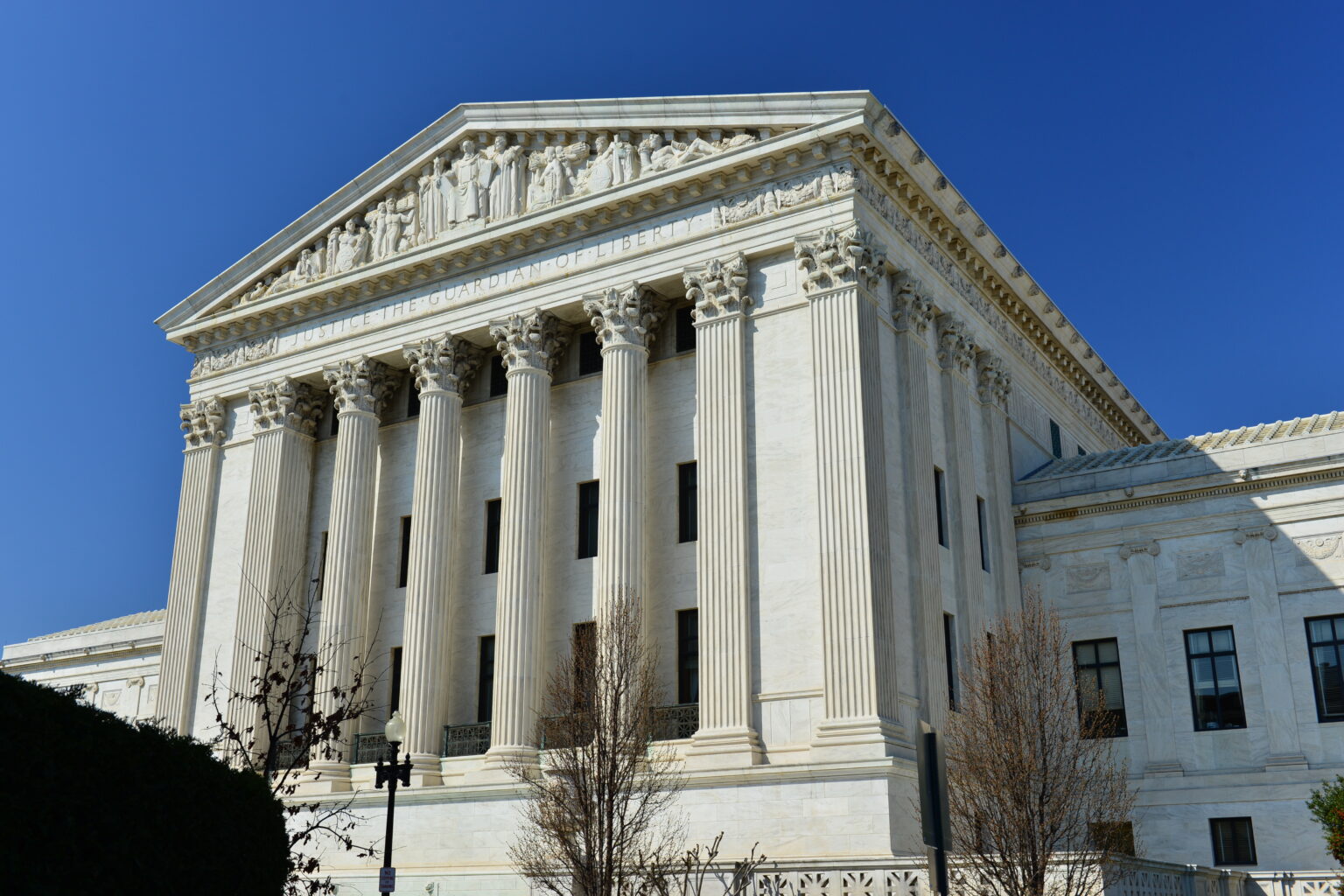
Last summer’s Loper Bright decision was supposed to be a watershed moment for administrative law. By overturning Chevron deference, the U.S. Supreme Court declared that federal courts could no longer defer to agency interpretations of ambiguous statutes. Instead, judges would exercise independent judgment, particularly when agencies advanced interpretations that favored their own regulatory or enforcement positions.
For healthcare providers facing Medicare audits, this seemed like a lifeline. For decades, Administrative Law Judges (ALJs) had routinely deferred to Medicare contractor interpretations and agency guidance, even when provider experts offered compelling contrary evidence. Loper Bright appeared to herald a new era in which methodological rigor and expert testimony might finally get fair consideration.
The celebration of that promise, as it turns out, was premature.
A Recent Test Case
A recent Medicare appeals case presented an ideal test of Loper Bright’s reach into administrative proceedings. A Medicare contractor had extrapolated a significant overpayment demand based on a statistical sample, despite what expert analysis identified as multiple fatal methodological flaws, which included the following:
- Variable appraisal methodology applied to binary medical necessity determinations;
- Systematic upward bias, with sample means exceeding universe parameters;
- Use of RAT-STATS software limitations in highly skewed, low-variance universes; and
- Certainty stratum bias affecting the reliability of projections.
More critically, an independent coding expert had reviewed the sampled claims and concluded they were properly coded and medically necessary. Under Loper Bright’s framework, this should have created exactly the kind of scenario where ALJs would exercise independent judgment, rather than defaulting to agency guidance.
The ALJ’s Bright-Line Rejection
Instead, the ALJ drew an explicit bright line excluding Loper Bright from Medicare administrative proceedings. The reasoning deserves careful attention:
“This is not an Article III court. OMHA (Office of Medicare Hearings and Appeals) ALJs are administrative adjudicators within the Department of Health and Human Services (HHS), an executive branch agency. Loper Bright does not govern the relationship between an administrative adjudicator and the agency’s own regulations and policy manuals.”
This wasn’t a nuanced interpretation or a case-specific limitation. It was a categorical rejection of Loper Bright’s applicability to the entire Medicare appeals process.
The ALJ went further, explicitly defending continued reliance on the Medicare Program Integrity Manual (MPIM) Chapter 8 – precisely the kind of agency guidance that Loper Bright was meant to constrain:
“Moreover, the MPIM is not merely an ‘agency interpretation’ of an ambiguous statute…It is the operational manual that implements statutory and regulatory requirements for statistical sampling.”
The Methodological Defeat
The ALJ’s decision revealed a troubling form of acknowledged deference. While recognizing various statistical challenges raised by the provider’s expert testimony, the ALJ explicitly chose to defer to MPIM guidelines, rather than exercise independent judgment on the methodological questions.
The decision shows the ALJ understood the problems with the contractor’s approach, acknowledging expert contentions about variable appraisal methodology, systematic bias issues, and mathematical inconsistencies in the extrapolation. Yet rather than independently evaluating these methodological challenges on their merits, the ALJ consistently fell back on MPIM compliance as the controlling standard.
A portion of the disputed claims were ultimately found to have sufficient documentation supporting medical necessity, which should have triggered serious questions about the extrapolation methodology. If a significant percentage of the “improperly paid” claims were actually proper, the universe-wide projections became mathematically suspect. Yet even this concrete evidence of systematic error was insufficient to overcome the ALJ’s deference to MPIM procedures.
The ALJ essentially admitted that the statistical methods were problematic while simultaneously ruling that MPIM compliance trumped methodological rigor. Expert testimony identifying fundamental flaws – mathematical impossibilities, systematic bias, inappropriate sampling techniques – was acknowledged, but dismissed, in favor of agency guidance compliance.
This creates the perverse result where judges can recognize methodological problems but refuse to act on that recognition, hiding behind agency deference that the Supreme Court specifically sought to limit.
The Administrative Law Carve-Out
What emerged from this decision is a sophisticated administrative law carve-out that effectively insulates Medicare appeals from Loper Bright’s reach. The logic works like this:
- Jurisdictional Distinction: ALJs are not Article III courts, so they’re not bound by Supreme Court precedent on judicial deference.
- Internal Agency Character: Medicare appeals are internal agency proceedings, not judicial review of agency action.
- Operational Manual Defense: Agency guidance like the MPIM represents operational implementation, not interpretive overreach.
This creates a remarkable two-tier system whereby federal district courts reviewing Medicare appeals would be bound by Loper Bright’s anti-deference mandate, while ALJs hearing the same disputes remain explicitly bound by the very agency guidance that federal courts must now scrutinize independently.
The Pattern of Resistance
The decision’s language suggests this wasn’t an isolated judicial interpretation but reflects systematic guidance from HHS to its ALJs. The categorical nature of the Loper Bright rejection, the detailed defense of MPIM authority, and the structured argumentation all point to coordinated messaging designed to preserve pre-Loper Bright deference patterns within the administrative system.
This represents a form of bureaucratic nullification – using jurisdictional distinctions and procedural technicalities to avoid the substantive reforms that the Supreme Court intended.
The Practical Impact
For healthcare providers, this administrative law loophole creates a particularly perverse incentive structure. The most sophisticated methodological challenges and expert testimony are precisely the issues that ALJs continue to defer to agency guidance on, while only the most straightforward documentation disputes receive independent consideration.
In recent cases, detailed statistical analysis identifying mathematical impossibilities in government extrapolation methodologies has been dismissed in favor of MPIM compliance, while basic medical record review results in partial claim reversals. This inverts the appropriate analytical hierarchy – complex methodological questions require more independent judicial scrutiny, not less.
Looking Forward
Recent Medicare appeals decisions reveal that Loper Bright’s promise of reduced agency deference will require more than Supreme Court precedent to implement. It will require either:
- Congressional action explicitly extending Loper Bright principles to administrative proceedings;
- Circuit court decisions rejecting the ALJ jurisdiction distinction; or
- Systematic provider challenges forcing the issue up to federal courts.
Until then, Medicare providers face a peculiar form of constitutional inequality – Loper Bright protects them in federal court, but not in the administrative proceedings, where most Medicare disputes are actually decided.
The Supreme Court’s promise of restored judicial independence remains unfulfilled where it matters most: in the day-to-day administrative proceedings that determine billions in Medicare overpayment demands.
That’s not just a legal technicality – it’s a fundamental failure of administrative law reform.